

Description
HISTORY OF THE 4p COMPOUNDS
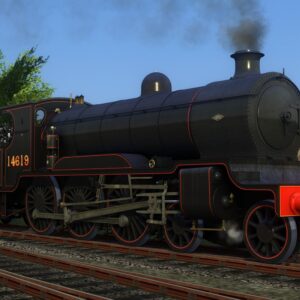
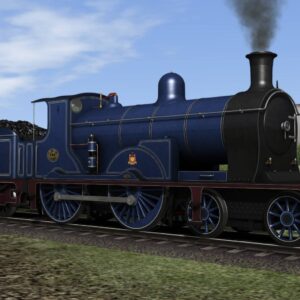
The design of compound locomotives in the in UK had a very chequred career. The LNWR Webb compounds had been very undistinguished & Worsdell’s two-cylinder compound 4-4-0s for the North Eastern Railway were equally unsuccessful. Worsdell’s assistant, W.M. Smith, then persuaded Worsdell to rebuild one of the 4-4-0s, No. 1619, as a three-cylinder compound with a single high pressure cylinder inside the frame with the exhaust from that cylinder flowing to two low pressure outside cylinders. This was markedly better than its previous guise & although no more NE engines were converted this way, Smith was able to share the experience with Johnson whom he had known for many years. With increasing weight of trains on the Midland Railway and the constantly developing services, Johnson used authority previously given to construct two compound 4-4-0s using the Smith principles. Unique to these two locomotives was the ability to adjust the settings of the high-pressure and low-pressure valve gears independently (though later removed after trials). The two engines, numbered 2631 & 2632, were constructed during autumn of 1901, tested & entered traffic in January of 1902. The weight, and particularly the 19 1/2 axleload, caused major concern & debate with the Midland Railway board, the company’s civil engineer complaining that the engine exceeded the axleweight agreed in 1897 for the increased power engine and 108 bridges would have to be strengthened at a cost of £96,000 if the weight of the new engines could not be altered by rebalancing. As a result of this, the two new Compounds were restricted to Leeds-Carlisle route until the bridge strengthening had been carried out. Johnson had pleaded that the stresses produced by the hammer blow of a three-cylinder engine on the track mitigated the impact of the heavier engine and the civil engineer responded with permission to go to 19 tons 1 cwt, not the 19 1/2 Tons of 2631 & 2632. The trials of the two Compounds over the Settle to Carlisle route proved highly satisfactory and the remaining three engines of the order, 2633-2635, were constructed between July and November 1903.
The trials of the two Compounds over the Settle to Carlisle route proved highly satisfactory and the remaining three engines of the order, 2633-2635, were constructed between July and November 1903. The only significant change from the two prototypes was that the independent control of the high & low pressure admission of steam to the cylinders was abandoned as the need to work the independently had not been necessary in the trials. Changes were also made to the reverser with a straight Johnson bar & the running plate flat instead of raised over the cylinder. By this time the bridges had been strengthened and the Compounds were the accepted all over the company’s main routes apart from Derby-Bristol line, where the class 3 “Belpaires” were the maximum axleload engines permitted until LMS days.
Johnson retired at the end of 1903 and his successor, Deeley, was sufficiently impressed with the five Compounds’ performance. With Deeley taking the throne of CME of the MR came a few changes to the original five Compounds before the next batch of Compounds were done. Their livery was simplified from the fully lined and decorated Johnson red to a revised red livery with crest on the cabside, a completely flat smokebox door with a numberplate & shedplate, large numerals that were polished steel & reduced lining on the tender along with large numerals. The brake whistle also being removed at this point in time. Black wheels & black painted coupling rod flutes. Brass number “4”s were placed on the upper cab side in typical MR power classification of this era. The original 4,500 Gallon Bogie tenders would also be removed from the class after 1908 & replaced with the Deeley style tender which would be with this class for the remainder of their working lives. Eventually all of the original five locomotives in their original conditions were entirely rebuilt into full Deeley condition with superheating & a completely different look by 1915.
Starting in 1905 more batches of the Compounds were ordered from Derby. There were some significant dimension changes, the boiler pressure being raised to 225lbs psi rather than 195lbs psi. Deeley also simplified the external appearance with a more substantial cab, a more harmonious treatment of the rear coupled wheel splasher integrated into the cab design and a six-wheel rather than bogie tender following the introduction of water troughs on the main routes. Another external difference was the shape of the smokebox with superheaters, which had proven successful with the eariler conversion of the ‘Belpaires’ and many of the Johnson Class 2 4-4-0s.
Although the LMS embarked on trials with express engines of the constituted companies between 1923 & 1925, it would seem that the former Midland officers had already decided to build a version of the Deeley Compound as superheated by Fowler. Between 1924 and 1932 over 195 new Compounds were delivered. These seemingly chaning very little from their former MR counterparts with exception to being left hand drive instead of right hand drive & various Fowler fittings in the cab instead of Johnson. They also appeared with a slightly squatter dome & different chimneys. Different style frames were also seen on them but varied member to member as frames needed to be strengthened. The MR Ramsbottoms were also replaced with the later rosspop safety valves.

Reviews
There are no reviews yet.