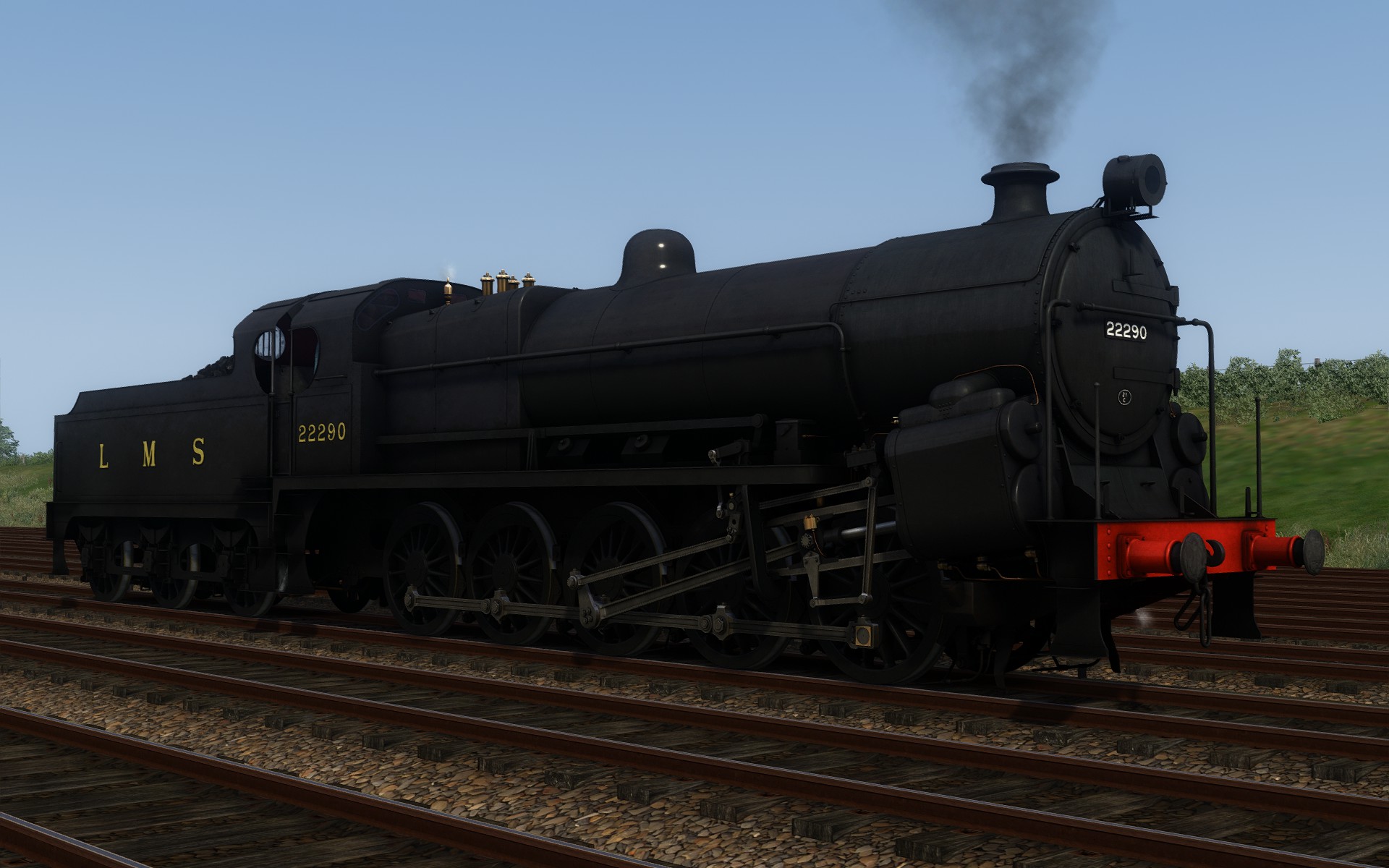
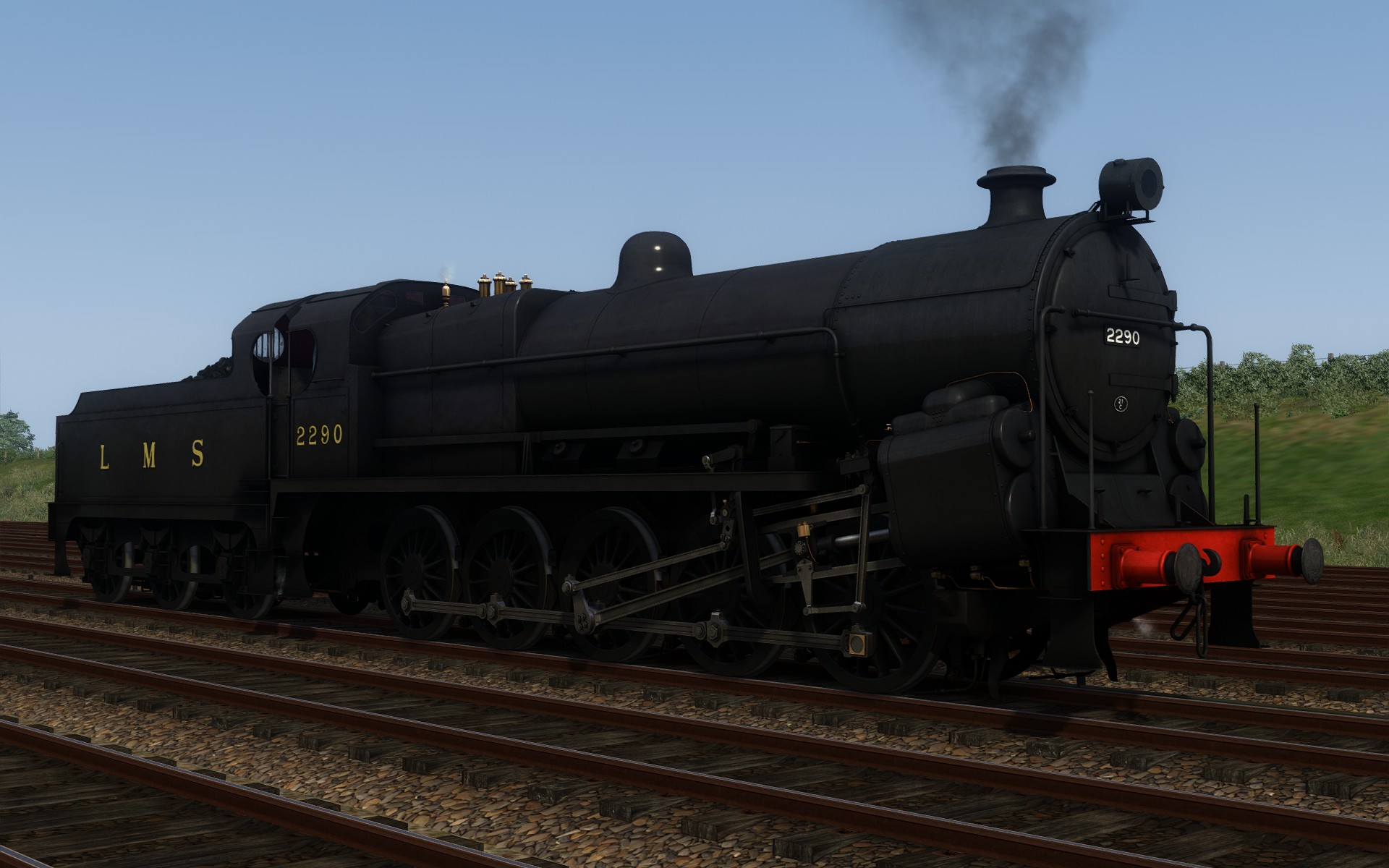
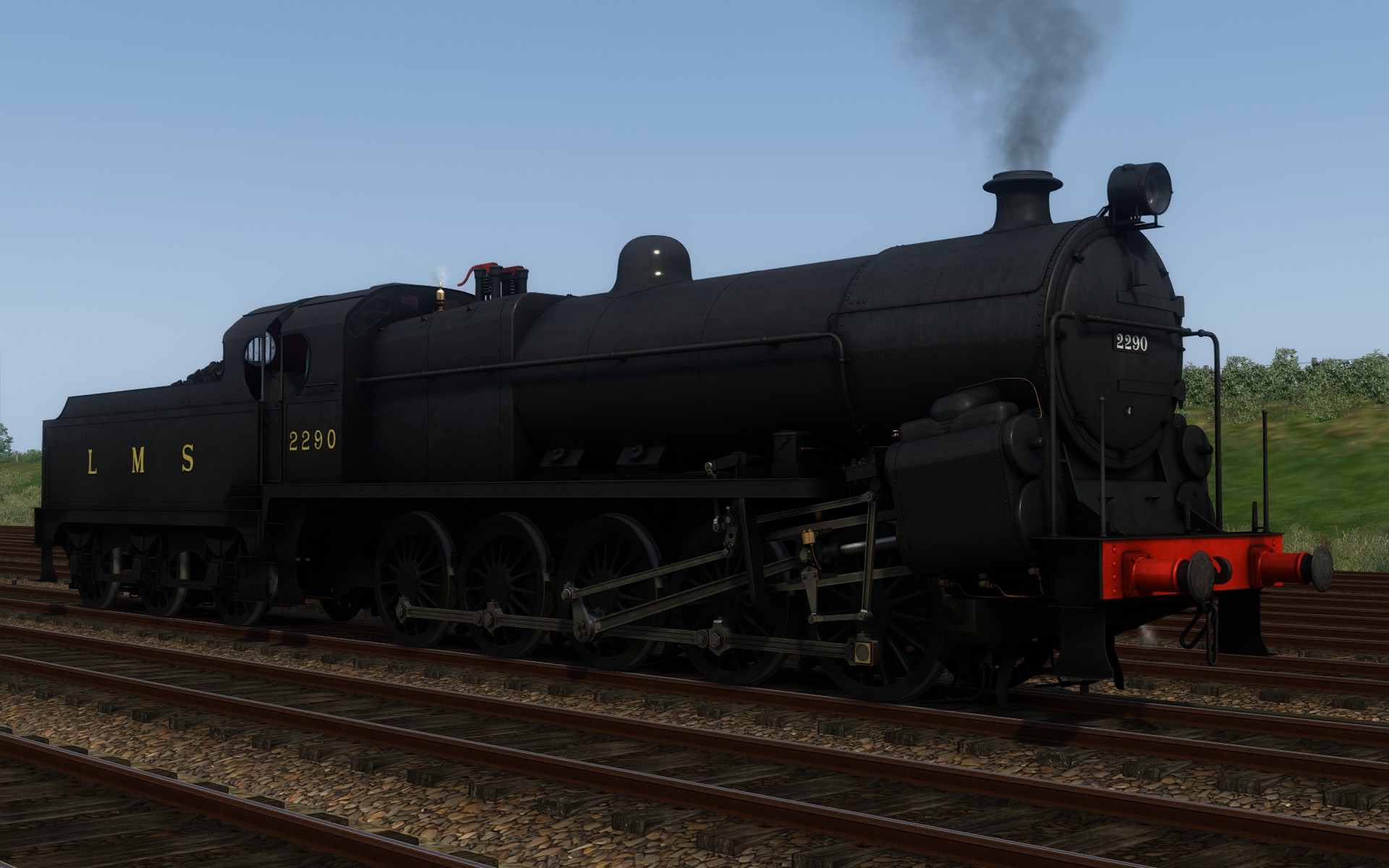
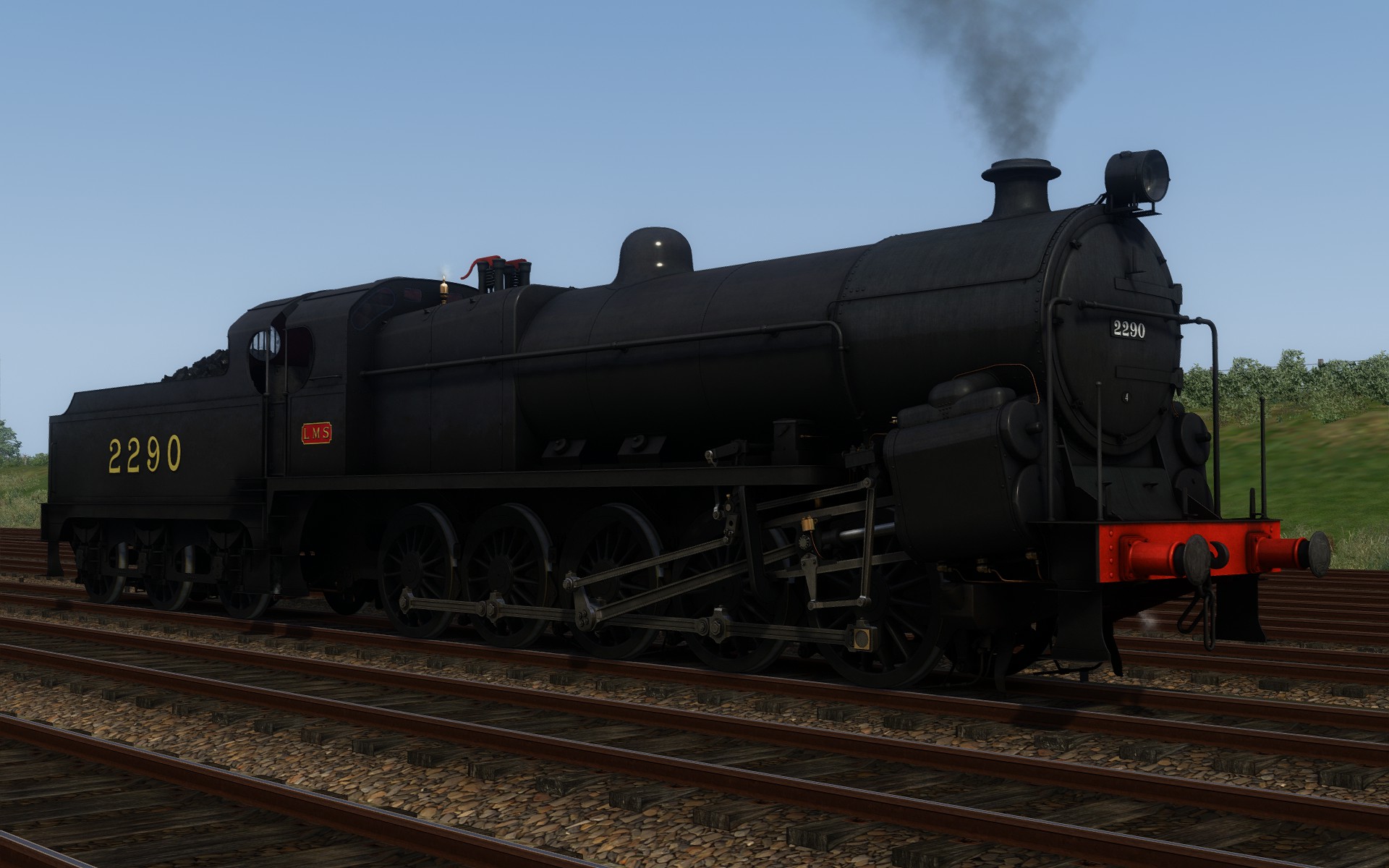
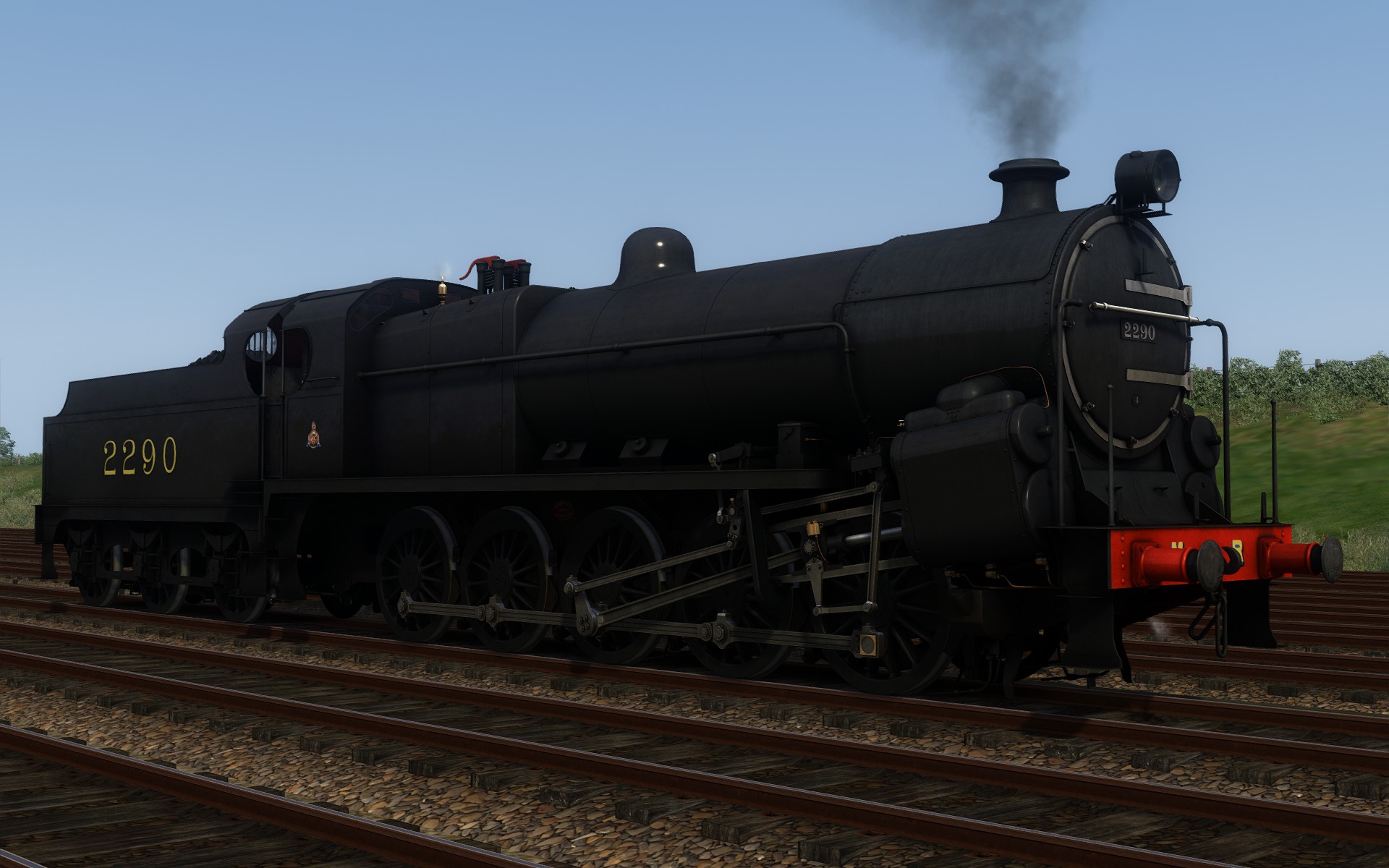
Description
HISTORY OF BIG BERTHA
The need for a large banking engine specifically to work on the Lickey Incline had been recognized as long ago as 1845 by Joseph McConnell, the locomotive engineer who was the superintendent of the Birmingham-Gloucester Railway from 1842. He built an 0-6-0 saddle tank weighing about 30 tons, No. 38, named ‘Great Britain’, which was capable of hauling 135 tons up the incline at 8-10 mph. This engine was rebuilt at least twice before final scrapping in 1901 after 56 years service. The concept of a specialized banking engine had been established.
The Midland Railway continued this tradition when they began to consider a special banker in 1911. During the next few years various designs were considered, including a 2-10-0T, an articulated 2-6-6-2T & an 0-6-6-0T with a rigid frame. In the event the design adopted was an 0-10-0, the only decapod tender engine in service at the time. She was the most powerful & largest engine built for the Midland Railway with four enormous cylinders & a tender cab which was essential as she spent half her life in reverse & protection from the crew was imperative. The specially superheated boiler originally fitted was number 4886;a second boiler No. 5395 was fitted in December 1922 & these two boilers then fitted alternately through the engine’s life.
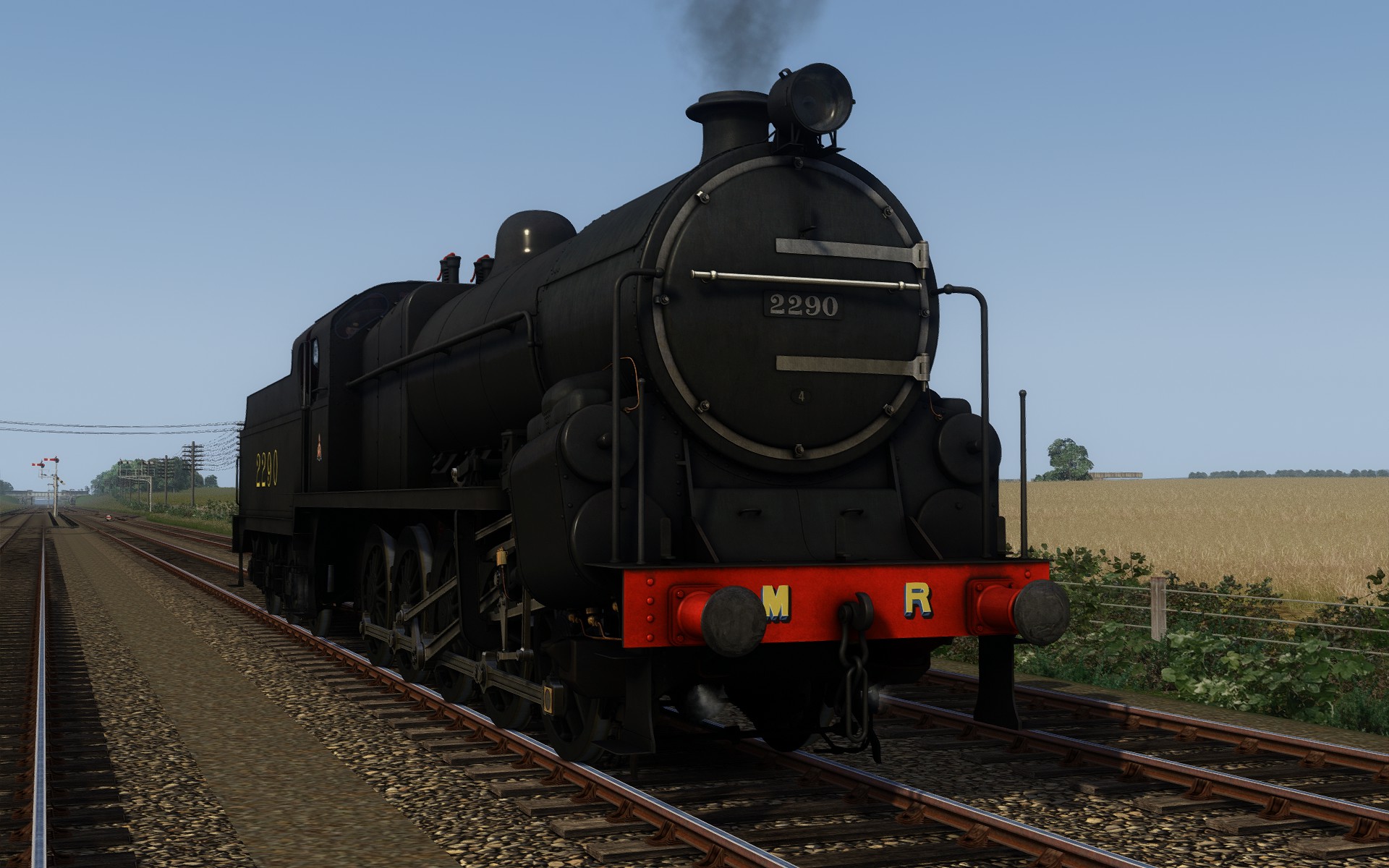
The newly-built engine was recorded in the erecting shop at Derby Works at the end of November 1919 ready for painting. The first steaming took place on 1 January 1920 at Derby & the engine, numbered 2290, was soon dispatched to Bromsgrove, arriving 20th January 1920. It was to remain at Bromsgrove for the next 36 years other than occasional visits to Derby Works for overhaul, and a very brief spell on trail, hauling coal trains between Toton & Brent in 1924. This was no a success & no further similar engines were built. The principal features of the new engine were the ten coupled wheels, four simple-expansion cylinders, and a steam distribution arrangement by which two ordinary piston valves regulated the steam supply to four cylinders. With one exception – that of the well-known “Decapod” tank locomotive formerly on the Great Eastern Railway – the new Midland engine was the first locomotive working in Britain to run upon five coupled axles, and was therefore the first tender engine built for the home railways of the 0-10-0 type.
As a British freight engine it was also unique in employing four cylinders working with simple expansion; and the valve arrangement was a novelty in the UK since it represented the simplest means known for distributing steam to four cylinders, needing no rocking levers, extra valves, etc, and therefore adding not one single moving part to the valve motion over and above what was required for an ordinary two-cylinder machine. The system adopted by Sir Henry Fowler merits particular attention. Walschaerts’ gear, of exceedingly light and elegant design, and arranged with a maximum cut-off of 75% drove an outside-admission piston valve situated in the normal position above the outside cylinder.
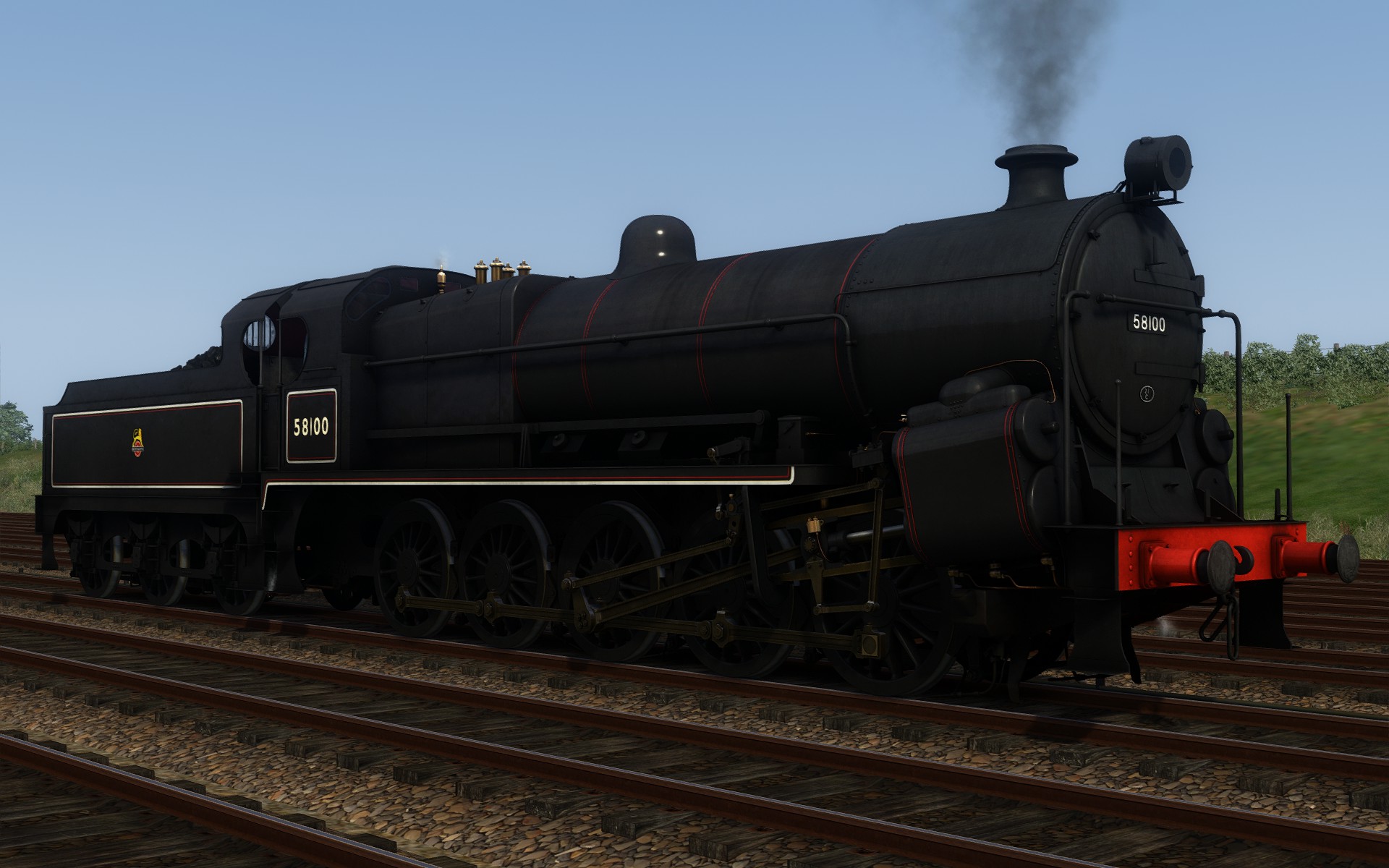
The tender could hold 2050 gallons of water and 4 tons of coal – each ascent consumed about 7 cwt. Big Bertha’ as she became known was from the outset well liked and a popular engine and was to pound up and down the Incline for successive crews over many years, amassing an unbelievable 838,856 miles by the time of her withdrawal in May 1956. In 1947 and late 1948 she had been renumbered 22290 and then 58100. During the last six or seven years of her life covered by this record she shared all the banking duties with the Class 3F 0-6-0 ‘Jinty’ tank engines which had been introduced in 1924.
The regular engines of this class at Bromsgrove during this time were: 47257/47276/47301/47303/47305/47308/47425/47502/47565/ 47635. They were supplemented by the 21C-allocated Class 3F 0-6-0 locomotives 43186/43462/43667.
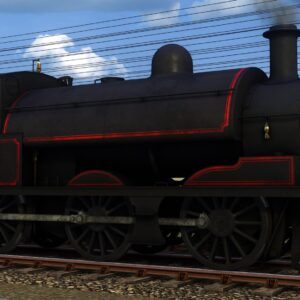
Absorbed into the London, Midland & Scottish Railway in 1923. Bertha would not be repainted from the MR livery until 1926. The large headlamp was fitted just a year prior to 1923 to help drivers judge distances when ‘buffering up’ to stationary trains at night. Doubtless one or two Guards had suffered the effects of heavy impacts by No. 2290!
However, some engine crews subsequently refused to use the electric light, as its tell-tale powerful beam made train-engine crews aware that No. 2290 was at the rear, leading to the temptation to let the 0-10-0 take more than a fair share of the load. The banker crews, keen to avoid the reprimands which followed if the blame for any delay was laid at their feet, therefore chose to avoid use of the electric light & keep the train crew ‘in the dark’ as to which locomotive was assisting!
No. 2290 was painted by the LMS in standard pre-1928 livery (code C1), carrying its number on the tender in gold. Carrying the Midland & later LMS shed plate ‘4’ (Bromsgrove, sub shed to Worcester). The engine was maintained by Derby Works, with major overhauls taking place every 11-13 months; in its earlier years No. 2290 went ‘dead’ to Derby with its motion dismantled, returning to Bromsgrove in the same fashion, accompanied by commissioning fitters who reassembled the motion & handed the 0-10-0 over for traffic; later years it rain light to Derby, under its own steam, after assisting a train to Blackwell. Overhauling the 0-10-0 was regarded as priority by the Works & a second boiler, built in 1922, had helped reduce time spent in the Works. The boiler was unique, but shared much in common with that of the large-boilered SDJR 7Fs.
Apart from a short spell in 1924, when No. 2290 was unsuccessfully subjected to trials on coal trains between Toton & Brent, the 0-10-0 spent the entire LMS period working at Bromsgrove. The 1924 trials were unsuccessful as No. 2290 was designed for short periods of hard work, rather than sustained high power output.
No. 2290 performed well at its allotted tasks into LMS ownership & was well liked by footplatemen at Bromsgrove, who referred to the machine as ‘Big Emma’, ‘Big Bertha’ or simply ‘Liz’. One troublesome & unpopular feature of the locomotive was the steam reverser & this was removed & replaced by a more conventional manual version during annual overhaul in September 1938. The tender sides would also be ‘cut-down’ during the LMS period to allow for better crew visibility while moving in reverse.
In 1935 the shedplate ‘4’ (Bromsgrove, sub shed to Worcester) was replaced by shed plate 21C (sub shed to Saltley) and in 1937 the MR-pattern smokebox numberplate was replaced by a sans-serif style. September 1938 the steam reverser would be replaced by a Stanier style screw type. (note the reverser rod on the side of the locomotive boiler/firebox.) The MR style Ramsbottom safety valve would also be replaced with the LMS standard ross-pops.
During the Second World War, No. 2990 worked normally, although in 1940 the electric headlamp glass was reduced in size by half and a hood fitted, to reduce the risk of the locomotive being spotted by enemy airmen, and betraying the location of the railway during the blackout. It would retain this covering beyond WWII until its withdrawal.
The ‘Lickey Banker’ became part of BR’s fleet on January 1st 1948 & would be outshopped in BR mixed traffic lined black. The 0-10-0 was regarded as originally intended, to be the equal of a pair of Class 3F 0-6-0Ts, though with a saving on coal costs. During 1949, coal consumption per banking trip was estimated by Bromsgrove enginemen as follows:
- ‘3F’ 0-6-0Ts = 5cwt
- Beyer Garratt No. 69999 = 10-12cwt
- ‘Bertha’ = 6-7cwt
All told, the Bromsgrove bankers burned approximately 300 tons of coal each week. No. 58100 worked until 1956 when it was withdrawn by BR and transferred to Derby Works. It would remain on display around Derby for some time in an attempt to lure preservationists & discussed extensively for the national collection, but this would not come to pass and the ‘Lickey Banker’ was scrapped — a sad loss indeed. ‘Big Bertha’ is still a big part of Bromsgrove’s history/identity to this day.

Reviews
There are no reviews yet.